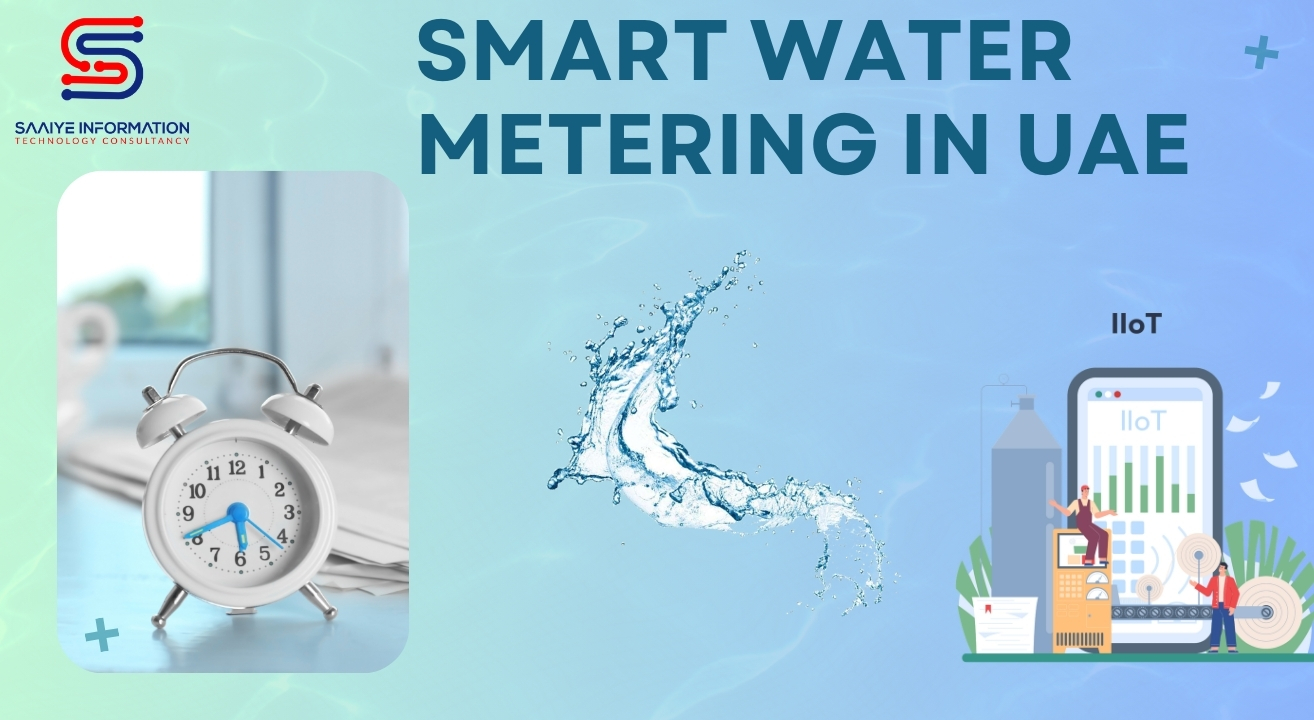
Smart Water Metering is emerging as a necessary technology to those organizations that are interested in better monitoring and management of water usage. As the issue of water shortage and environmental sustainability continue to raise worries, companies and organizations are resorting to Internet of Things (IoT) to enhance water efficiency and waste. In Saaiye Information Technology Consultancy, we are aware of the significance of the digital technologies in designing smarter infrastructure and sustainable management of resources.
Understanding IoT-Based Water Management
One of the most useful natural resources is water, which is usually not managed properly because of the absence of monitoring and inefficient systems. The world water research reveals that in the next few years, billions of individuals are likely to experience water shortage. This fact introduces the necessity of smart technologies that will allow the organizations to track the water consumption in real-time and react swiftly to the possible challenges.
The IoT-based water management involves the use of interrelated devices like sensors, meters, cloud-based software or systems to monitor water flow, pressure, temperature, and usage patterns. These systems gather real-time information and give actionable insights that can guide the businesses to maximize the amount of water they use and avoid wastage.
With high level monitoring and automated reporting, organizations become fully informed on the use of water in all their facilities. This degree of control assists in lowering the cost of operation besides encouraging responsible environmental practices.
How IoT Water Management Systems Work
Smart water systems are systems that are run by both hardware and software technologies that constantly interact with each other. The system is usually operated in three primary steps which include data collection, analysis, and response.
1. Data Collection Through Smart Sensors
Smart water management systems based on IoT depend on water sensors and meters which are attached at different points of a building or other facilities. These gadgets gauge the flow rates and pressure as well as the temperature and the usage patterns of water.
The information gathered is sent to a centralized monitoring platform using the wireless networks like Wi-Fi or cellular communication. A single meter can be used to track water consumption in a whole building, and several meters may be applied to track individual floors, individual departments or devices.
This is the type of continuous data gathering that enables organizations to monitor their water usage and detect irregularities that could be leaks or inefficiencies.
2. Data Analysis and Reporting
After data is gathered the data is processed by cloud-based software solutions which transform raw data into performance reports and easy to understand dashboards.
Web dashboard or mobile applications allow facility managers to see real time water consumption, past trends, and performance. The system also gives notifications via email, SMS, or app notifications when an abnormality is found like sudden increase or decrease in water usage or potential leakage.
This prompt feedback enables the businesses to have complete control of the water system despite their geographic location.
3. Automated Response and Control
Among the most useful features of the IoT water control, there is the possibility to respond fast to possible issues. In case of leakage or bursting pipe or unusual flow, the system will enable the automatic reactions, including turning off the water supply using electronic valves.
This quick reaction will reduce the damage of water, cut down maintenance expenses and safeguard infrastructure. Organizations will be able to save a lot of water wastage and disruption in operations by the shortest possible time of response to a detected problem.
Key Benefits of IoT Water Management Systems
Organizations that adopt IoT water management technologies gain several operational and environmental advantages.
Immediate Leak Detection
Water leakages can be very destructive to buildings, equipment, and infrastructure when it is not noticed. The IoT sensors have the capability of identifying the slightest of leakages and moisture variations. The leak detection is immediately sent and instant alerts are issued to the maintenance teams to respond promptly.
The early identification would allow avoiding massive destruction and do not make valuable water resources go to waste.
Real-Time Monitoring and Communication
The other benefit of the IoT water system is the real-time communication between the sensors and the monitoring systems. They have web dashboards or mobile applications that allow users to check their water consumption real-time anywhere.
This transparency would enable the businesses to make sound judgments concerning their consumption of water and to adopt conservation measures where need-be.
Efficient Multi-Site Water Management
Most organizations have several buildings or geographical locations. With IoT systems, all sites are monitored in terms of water consumption using a single central dashboard.
The facility managers are able to know the water performance at the different locations, uncover the areas of inefficiency, and apply corrective actions, which will lead to a lower consumption of water.
Improved Sustainability and Cost Savings
Water conservation does not only save natural resources but also reduces the utility bills. Through the analysis of usage patterns and early identification of inefficiencies, the business can optimize the use of the water and save unnecessary costs.
Sustainability initiatives are also facilitated by these systems as they enable organizations to cut on their environmental footprint as well as meet the standards set by regulations.
The Future of Smart Water Technologies
With the continuous expansion of cities and industries, there will be a high demand to manage resources in an efficient manner. The IoT technology will most likely help in determining the future of city infrastructure, such as water management systems.
Predictive analytics, AI-based monitoring, and enhanced sensor technologies are other innovations that will add value to the water management platforms. Such developments will enable organizations to foresee possible problems and prevent them even earlier and manage resources even better.
Digital transformation within the infrastructure management is now not an option anymore, it is a necessity that businesses that want to continue being sustainable and cost-efficient over time.
Conclusion
Water management is important because it makes the environment sustainable and efficient in terms of operations. The IoT-enabled solutions are what an organization requires to keep track of, analyze, and regulate its water consumption in real time. Through the adoption of technology such as Smart Water Metering, companies will lower water wastage, discovery leaks within seconds and have full control over their water running systems.
We are serious about assisting organizations in implementing smart technologies that assist in smarter infrastructure and more resource-saving approaches at Saaiye Information Technology Consultancy. With the help of the innovative IoT solutions, the business world will be able to make significant actions towards the water conservation and enhance operational performance.