
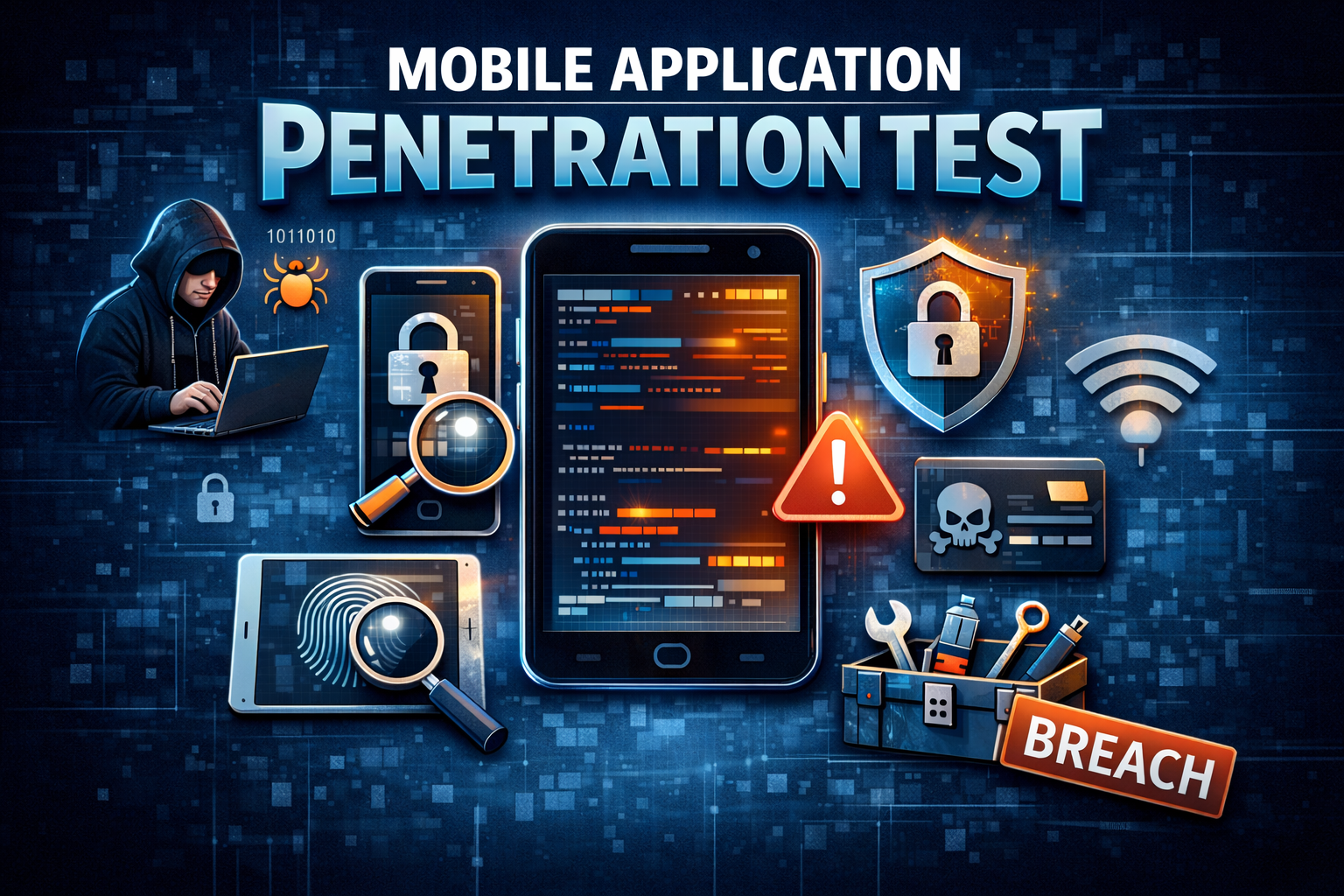
Fintech Mobile App Penetration Testing Requirements in UAE
Estimated reading time: 7–9 minutes
- Importance of penetration testing for fintech applications in the UAE.
- Key regulations: UAE PDPL and PCI DSS compliance.
- Systematic approach to conducting penetration tests.
- Benefits of penetration testing for enhanced security and customer trust.
- Best practices for maintaining mobile app security.
Table of Contents
- Understanding Fintech Penetration Testing
- Why is Penetration Testing Crucial for Fintech Apps in the UAE?
- Key Regulatory Considerations for Penetration Testing in the UAE
- Steps to Conduct Effective Fintech Mobile App Penetration Testing
- Benefits of Penetration Testing for UAE Fintech Companies
- Best Practices for Mobile App Security in the UAE
- FAQ
- Conclusion
Understanding Fintech Penetration Testing
Fintech penetration testing refers to simulated cyber attacks on mobile applications to identify and exploit vulnerabilities. This process is essential for safeguarding sensitive financial data and ensuring compliance with regulatory standards set by the Central Bank of the UAE (CBUAE) and other entities.
Why is Penetration Testing Crucial for Fintech Apps in the UAE?
The UAE is a prime target for cybercriminals due to its wealth and strategic location, making penetration testing vital for:
- Identifying vulnerabilities before they can be exploited.
- Enhancing customer trust through security commitments.
- Meeting regulatory compliance requirements, including PCI DSS and UAE PDPL.
Key Regulatory Considerations for Penetration Testing in the UAE
Compliance with UAE regulations is critical for fintech companies. Key regulations include:
- UAE PDPL: The Personal Data Protection Law mandates secure processing and management of customer data.
- PCI DSS: Compulsory adherence to standards for any fintech handling credit card transactions, ensuring data integrity and security.
Steps to Conduct Effective Fintech Mobile App Penetration Testing
A systematic approach to penetration testing ensures thorough evaluation and effective risk mitigation. The essential steps include:
1. Planning and Scope Definition
Clearly define the testing scope, specifying the apps, network segments, and the specific tests to be conducted.
2. Reconnaissance
Gather information about the mobile app, such as APIs, user roles, and potential entry points for vulnerabilities.
3. Vulnerability Assessment
Utilize automated tools and manual techniques to identify potential vulnerabilities in the app.
4. Exploitation
Attempt to exploit identified vulnerabilities to verify their impact, gaining a clearer understanding of risk levels.
5. Reporting
Document findings in a comprehensive report, detailing vulnerabilities, potential impacts, and recommendations for remediation.
Benefits of Penetration Testing for UAE Fintech Companies
Investing in penetration testing for fintech mobile apps in the UAE brings substantial benefits:
- Enhanced Security: Proactively identifying and addressing vulnerabilities.
- Regulatory Compliance: Meeting legal obligations and avoiding penalties.
- Increased Customer Trust: Strengthening brand reputation through a commitment to security measures.
Best Practices for Mobile App Security in the UAE
Implementing best practices alongside penetration testing results in stronger security protocols:
- Utilize strong encryption for data transmission.
- Regularly update the app to patch known vulnerabilities.
- Conduct ongoing security training for developers and staff.
- Engage expert cybersecurity consultants for independent assessments.
FAQ
What is the typical duration of a penetration test for a mobile app?
The duration varies, generally ranging from one to four weeks, depending on the app’s complexity and the testing scope.
How often should fintech companies conduct penetration testing?
It is advised to conduct penetration testing at least bi-annually or after significant app updates or when new features are added.
What type of vulnerabilities can be discovered through penetration testing?
Common vulnerabilities discovered include inadequate data storage, insecure APIs, and authentication flaws.
Conclusion
Fintech mobile app penetration testing is not just a regulatory requirement; it is fundamental to operational security for all financial services in the UAE. Proactively identifying vulnerabilities allows fintech firms to protect their customers and maintain trust in an increasingly digital banking environment.
For expert penetration testing services tailored to your fintech mobile app, contact Saaiye Information Technology Consultancy today.
At Saaiye Information Technology Consultancy, we provide a comprehensive range of information security services, including, , , and . Our expertise ensures your business meets regulatory standards while providing robust protection for your data. Contact us today to get started!